Guide to Car Stereo Systems
How to choose the right system architecture, match the parts, preserve factory functions, and spend money where it actually changes the sound.
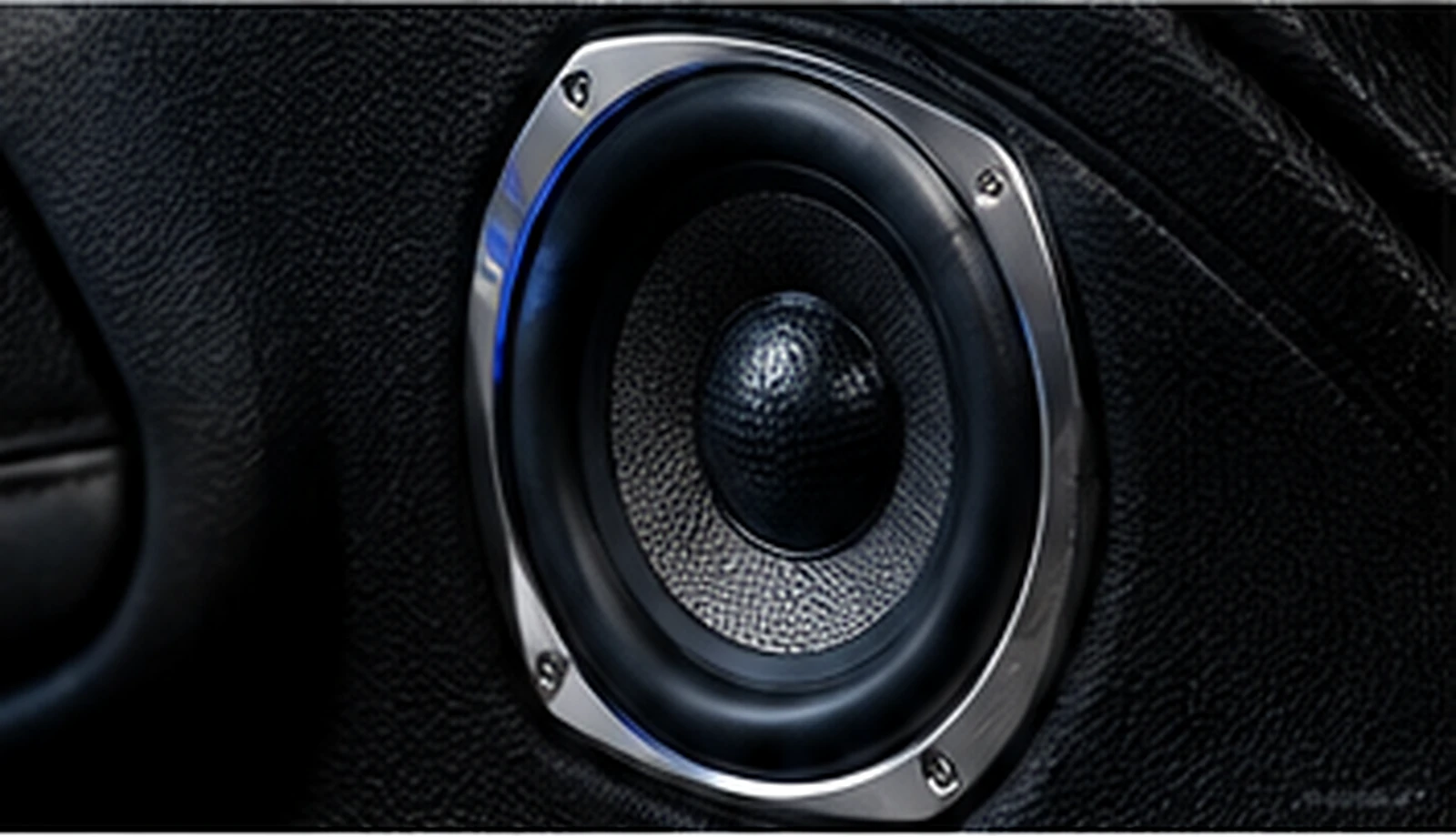
Upgrade a car stereo by problem, not by a fixed order such as "radio, speakers, amp, subwoofer." Decide what you want to improve, identify how the factory system is built, preserve the vehicle functions that matter, then change the component that is actually limiting the result.
Scope: This guide covers complete car stereo systems, including factory and aftermarket head units, speakers, amplifiers, subwoofers, DSPs, OEM integration, wiring, installation, tuning, and upgrade planning. It focuses on choosing a system architecture rather than ranking specific product models.
What should you upgrade first?
The first upgrade should target the problem you can actually identify. A system can contain expensive parts and still disappoint if the wrong link in the chain was changed.
| What bothers you now | First place to investigate | Likely path | Do not assume |
|---|---|---|---|
| No CarPlay, Android Auto, or modern connectivity | Head unit and OEM integration | Aftermarket receiver or compatible integration solution | Every factory radio can be replaced easily |
| Muddy or weak front sound | Front speakers, mounting, available power | Better front stage, installation, possibly amplification | A more expensive speaker automatically fixes the system |
| Distortion as volume rises | Source output, amplifier headroom, gain, speaker limits | Diagnose before buying | The speakers are necessarily defective |
| Not loud enough | Speaker sensitivity and available clean power | External amplifier and suitable speakers | Peak-watt ratings tell you what you need |
| Missing deep bass | Low-frequency system | Powered sub or separate subwoofer and amp | Larger door speakers substitute for a real subwoofer |
| Poor stereo image | Front-stage placement and tuning | Better front stage, DSP if justified | Rear speakers are the solution |
| New speakers sound worse than stock | Impedance, sensitivity, power, factory processing, installation | Correct the mismatch | Aftermarket automatically means better |
| Rattles or weak midbass | Door mounting and panel resonance | Installation improvements and targeted treatment | Another amplifier solves a mechanical problem |
| Complicated factory audio | OEM signal and factory amplifier/DSP | Integration interface, DSP, or specialist installation | Replacing one component leaves everything else unchanged |
| High-power system behaves unpredictably | Power wiring and charging system | Electrical diagnosis before more equipment | There is one universal wattage threshold for upgrades |
That symptom-first approach matches the recurring problems in enthusiast discussions: users often know the components they could buy but not which component solves the problem they hear. The same discussions repeatedly return to OEM retention, power and impedance, DSP, enclosure choice, installation quality, and hidden system cost.
Five car stereo system approaches worth considering
These are system architectures, not product rankings. We recommend different approaches for different needs rather than one universal build.
Factory-plus system
Best for drivers who want better sound without changing the dashboard.
Path: factory radio -> integration -> amp/DSP if needed -> speakers/sub. It preserves the original interface and vehicle functions.
Main limitation: factory signal processing can complicate integration.
Receiver-first system
Best for older or easily compatible vehicles that need modern features.
Path: aftermarket receiver -> speakers and/or amp -> optional sub. It adds connectivity, outputs, and sound controls at the source.
Main limitation: replacement may require adapters or sacrifice factory integration.
Front-stage system
Best for clarity, vocals, imaging, and everyday sound quality.
Path: source -> amp -> front speakers -> optional sub. It puts budget into the part of the stereo image the driver hears most directly.
Main limitation: installation quality matters heavily.
Bass-focused system
Best when the existing system sounds acceptable except for low bass.
Path: factory or aftermarket source -> sub amp or powered sub -> subwoofer. It can deliver a major audible change without replacing every speaker.
Main limitation: space, enclosure, wiring, and integration still matter.
DSP-based system
Best for complex factory systems or sound-quality builds needing precise control.
Path: source -> DSP -> amplification -> individually controlled speakers/sub. It adds crossover, EQ, level, and time-alignment control.
Main limitation: hardware without competent tuning can add cost without solving the problem.
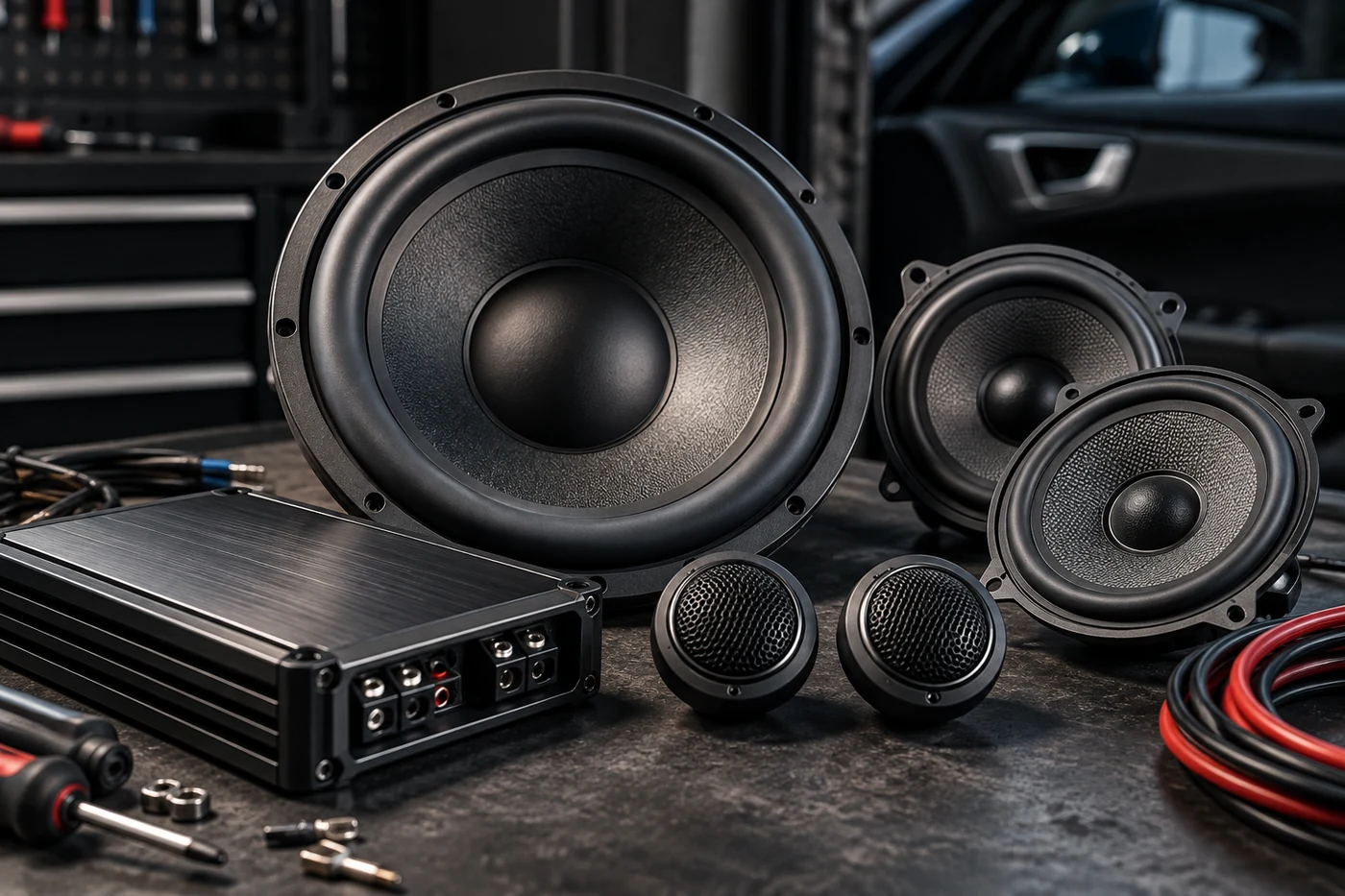
How a car stereo system actually works
Source -> processing -> amplification -> speakers -> cabin.
The source is usually a head unit, factory radio, or infotainment system. Processing may happen inside the factory system, an aftermarket receiver, an amplifier, or a separate digital signal processor. Amplification supplies power to the speakers. The speakers and subwoofer turn that electrical signal into sound. The doors, dashboard, seats, glass, mounting surfaces, and speaker locations then influence what reaches your ears.
A factory stereo is already a complete audio system. Replacing parts does not create a separate system - it changes pieces of the existing chain. That is why apparently simple upgrades can have unexpected results. AutoZone's current car-audio overview likewise treats the head unit, speakers, amplifier, subwoofer, and wiring as parts of one system.
Check the vehicle before you shop
Vehicle compatibility should come before brand preference.
For a head unit, confirm the exact year, make, model, trim, dashboard configuration, and factory audio package. Determine whether the vehicle has a separate factory amplifier and whether important features run through the infotainment system.
For speakers, nominal diameter is not enough. Mounting depth, bolt pattern, adapters, factory impedance, tweeter locations, and surrounding hardware can all affect fit.
Crutchfield's current stereo-selection guidance starts by filtering receivers for the vehicle and notes that steering-wheel controls or an existing backup camera can require additional hardware. Vehicle-specific systems such as iDatalink Maestro show why compatibility must be checked at the exact vehicle and receiver level: supported functions can include steering-wheel controls, climate information, vehicle data, and other factory features.
Should you keep the factory head unit?
Keeping the factory radio is often the sensible choice when the infotainment system is deeply integrated with the vehicle or when the existing interface already does everything you need.
Replacing the head unit becomes more attractive when the vehicle accepts an aftermarket receiver cleanly and you specifically want Apple CarPlay, Android Auto, stronger preamp connectivity, additional audio controls, camera inputs, or a different user interface. Apple confirms that CarPlay can be added to some existing vehicles through aftermarket systems, while Google requires a compatible vehicle or aftermarket stereo for Android Auto on the car display.
| Keep the factory unit when... | Consider an aftermarket unit when... |
|---|---|
| Important vehicle functions depend on it | Replacement is well supported for the vehicle |
| You already like the interface and connectivity | You specifically want CarPlay, Android Auto, cameras, or newer controls |
| A clean integration path is available | You want useful preamp outputs for future amplification |
| Replacing it would require excessive cost or fabrication | The factory source itself is a meaningful limitation |
| Reversibility matters | You are comfortable with the required integration hardware |
We would not replace a functioning factory head unit merely because aftermarket audio is being installed. Replace it when doing so solves a real source, feature, control, or expansion problem.
Choosing car speakers
New speakers can improve a system dramatically, but only when they suit the power source, mounting location, and intended role. The important checks are physical fit, impedance, sensitivity, RMS power handling, available amplification, tweeter placement, and installation quality.
Coaxial vs component speakers
We prefer coaxial speakers when simplicity, factory-location fit, and installation cost matter most. We prefer component speakers when the front stage is a priority and the vehicle provides sensible locations for separate tweeters.
A coaxial speaker places multiple drivers in one assembly. A component system separates the woofer and tweeter and normally uses a crossover. That gives the installer more control over tweeter placement and front-stage presentation, but it also creates more installation decisions.
The useful point is not that component speakers are universally better. A well-installed coaxial system can be a better decision than an ambitious component installation with poor placement or inadequate power.
Do you need rear speakers?
There is no universal answer. For a driver-focused sound-quality build, we prefer to put the strongest part of a limited budget into the front stage first. Rear speakers remain useful when rear passengers matter, when the owner prefers a more enveloping presentation, or when the factory architecture makes retaining them practical.
Do you need an amplifier?
You need an external amplifier when the speakers or subwoofer require more clean power than the existing system can supply for the output you want. You do not need one simply because the speakers are aftermarket.
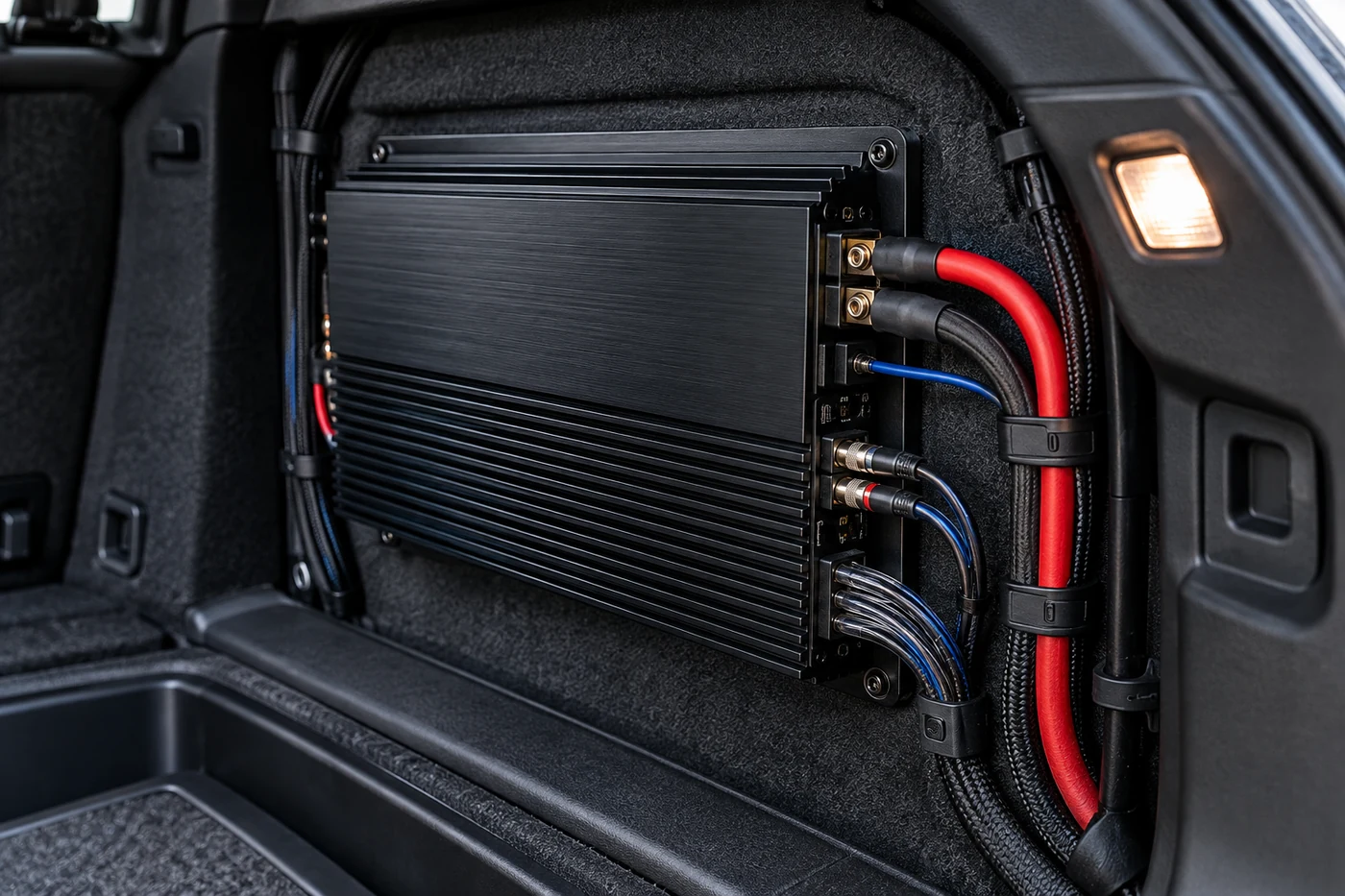
Amplifier channels and power should follow the speakers or subwoofer being driven. Crutchfield's current guidance likewise centers on continuous RMS output, channel count, and the load the amplifier will actually see.
Buying a bigger headline wattage number is not a substitute for matching the system.
- Existing system is clean at your normal volume
- An external amp may not be necessary.
- New speakers are designed for substantially more power
- An amp becomes more useful.
- The system loses clarity as volume rises
- Investigate source and amplifier headroom.
- You are adding a passive subwoofer
- Plan for suitable amplification.
- You want a DSP-controlled active system
- Multiple amplifier channels are usually part of the architecture.
RMS, peak power, and impedance
Use RMS specifications for system matching. Treat peak or maximum wattage primarily as a short-duration marketing specification rather than the number on which to design the system. Impedance, measured in ohms, matters because an amplifier is designed to operate safely into particular loads. With multiple drivers or dual voice coils, the final wired load presented to the amplifier matters.
Our recommendation is to choose the speakers or subwoofer configuration first, determine the resulting load, and then verify that the amplifier provides suitable clean RMS output at that impedance.
Gain is not a second volume control
Amplifier gain matches the amplifier's input sensitivity to the output level of the source. It is not an extra volume knob. Incorrect gain can contribute to unnecessary noise or clipping. If the system is not loud enough after proper gain setting, reconsider the power, speakers, or system design rather than simply increasing gain.
Do you need a subwoofer?
If the main complaint is a lack of deep bass, we usually recommend adding a proper subwoofer rather than forcing door speakers to reproduce frequencies they were not chosen to handle.
A powered subwoofer combines the driver, enclosure, and amplifier. We favor this approach when simplicity and space matter more than maximum output or extensive future changes.
A passive component subwoofer requires separate amplification and an appropriate enclosure. We favor that route when output, driver choice, enclosure design, and future flexibility matter more than simplicity.
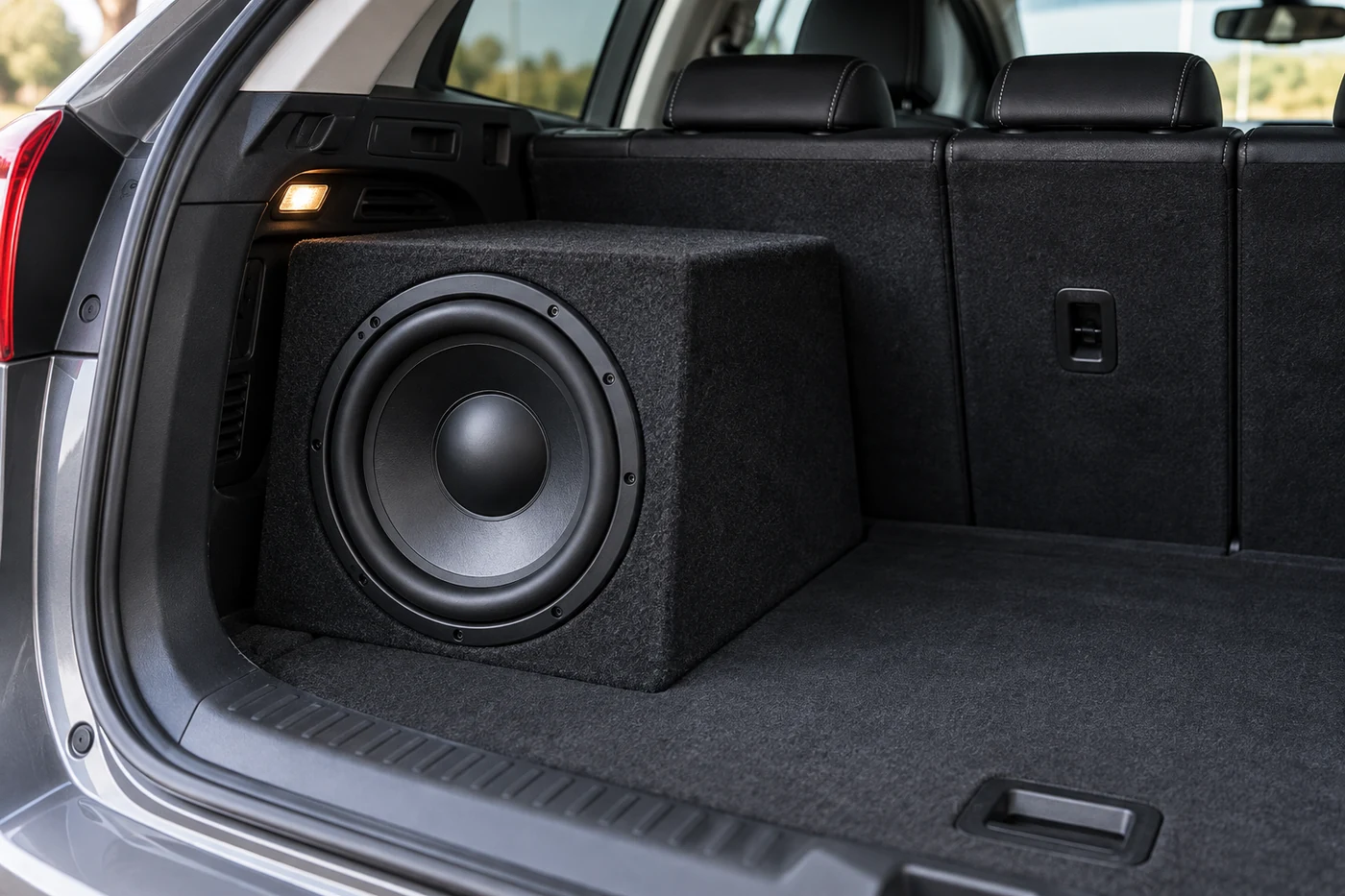
Sealed vs ported subwoofer enclosure
The shortcut "sealed equals sound quality, ported equals loud" is too crude to be a complete buying rule. A sealed enclosure is generally more compact and is commonly chosen for controlled bass. A ported enclosure uses a tuned vent to increase output around its operating range and generally requires more volume. The driver itself must also be suitable for the chosen enclosure and volume.
When is a DSP worth it?
A digital signal processor can control equalization, crossovers, output levels, and time alignment. It is particularly relevant when keeping a factory source with substantial processing or when building a system in which individual speakers require independent control.
Crutchfield's DSP guide describes DSPs as a way to integrate aftermarket amplification and speakers with factory radios while adding crossover, equalization, and time-alignment control. It also notes that some factory systems reduce bass as volume rises, one example of source behavior that can complicate downstream upgrades.
We recommend buying a DSP only when you can name the problem it will solve and have a realistic plan to tune it. A DSP is powerful because it provides control. That same control creates more ways to get the system wrong.
Sound treatment, electrical support, and installation quality
What sound treatment can and cannot do
Door treatment is not a substitute for better electronics, and better electronics are not a substitute for solid speaker mounting. A door speaker is attached to a large metal and plastic structure that can flex, leak acoustic energy, or rattle. Improving mounting rigidity, sealing obvious acoustic leaks around the speaker installation, and controlling resonant panels can improve the environment in which the speaker works.
We treat sound deadening as a targeted installation tool rather than a requirement to cover every visible metal surface.
The electrical system matters - but avoid arbitrary wattage rules
High-power amplifiers add electrical demand. Power cable size, grounding, fusing, connection quality, charging-system capability, and voltage behavior all matter. Crutchfield's amplifier installation guidance states that power and ground wiring must be sized for current demand and that the main power cable needs appropriate inline fuse protection close to the battery connection.
What we do not recommend is a universal statement such as "every system over X watts needs a new alternator." Vehicles have different charging systems, operating conditions, wiring, and electrical loads.
Installation quality is part of the system
The installed system is the product you actually hear. A receiver may need a dash kit, harness, steering-wheel-control interface, or camera adapter. An amplifier requires power, ground, fuse protection, signal connections, speaker wiring, physical mounting, and ventilation. A component speaker system can require tweeter mounting, crossovers, adapters, and door work. A passive subwoofer adds an enclosure and amplifier.
What a car stereo system really costs
The useful number is total installed cost: audio equipment + integration hardware + wiring + adapters + mounting hardware + enclosure + sound treatment + fabrication + labor + tuning.
Two systems with equally priced speakers, amplifiers, and subwoofers can end up at very different totals if one vehicle needs extensive factory integration or fabrication. We recommend setting the budget for the finished system before selecting individual components.
Staged upgrade vs complete rebuild
For most drivers with a limited budget, we prefer a planned staged upgrade. The key word is "planned." A staged build works when the first component remains useful during later stages. A receiver with the outputs needed for a future amplifier can avoid replacement. An amplifier with the right channel architecture can leave room for a subwoofer. Correctly sized power infrastructure may prevent running the same cable twice.
A complete rebuild makes more sense when the factory architecture is clearly unsuitable for the goal, the installer already knows the final system design, and the budget can cover the entire project including integration and tuning.
How to tune a finished car stereo system
Tuning is the point where a collection of components becomes a system. At minimum, verify signal cleanliness, amplifier gain, crossover settings, speaker polarity, subwoofer integration, and overall tonal balance. More advanced systems may also require phase adjustment, equalization, time alignment, and channel-by-channel DSP work.
Electronic crossover filters keep speakers from being asked to reproduce frequencies outside their intended roles. Crutchfield's amplifier guidance describes high-pass and low-pass filters as tools for dividing the signal so tweeters, midrange drivers, woofers, and subwoofers operate in appropriate frequency ranges.
The goal is not to maximize every adjustment. The goal is to make the system solve the original listening problem without creating another one.
A car stereo buying checklist
- Define the problem in plain language: weak bass, muddy vocals, not loud enough, distortion, poor imaging, outdated connectivity, or something else.
- Record the exact year, make, model, trim, and factory audio package.
- Determine whether the car has a factory amplifier or DSP.
- List every factory function that must remain, including cameras, steering-wheel controls, chimes, climate controls, and vehicle menus.
- Decide whether the factory head unit should be retained or replaced.
- Check physical fit for every speaker and head unit, including mounting depth and required adapters.
- Check speaker and subwoofer impedance, RMS ratings, and the available amplifier power at the required load.
- Decide whether a subwoofer is needed based on the bass you want and the space you are willing to give up.
- Add a DSP only if the signal or tuning requirements justify it.
- Include wiring, interfaces, enclosure, fabrication, labor, and tuning in the budget.
- Decide whether the installation is realistically within your DIY skills.
- Plan the system's future expansion before buying the first component.
- After installation, set gain and crossovers correctly and verify polarity and phase.
- Listen again to the problem that started the project and confirm that it is actually fixed.
Common car stereo system mistakes
Buying speakers before checking the factory system
A factory amplifier, unusual impedance, factory EQ, or restricted mounting location can change which speakers make sense.
Choosing an amplifier by peak wattage
Use continuous RMS output at the load you will actually run. Peak numbers are not a useful foundation for system design.
Treating gain as extra volume
Gain matches input sensitivity. Turning it up cannot create clean power that the amplifier does not have.
Replacing a modern factory radio without checking integration
Steering-wheel controls, cameras, vehicle settings, factory amplifiers, climate information, and other functions may require vehicle-specific interfaces.
Buying a subwoofer without planning the enclosure
A component subwoofer, enclosure, amplifier, available space, RMS power, and final impedance form one bass system. Choose them together.
Buying a DSP without budgeting for tuning
DSP capability is useful only when it is configured appropriately for the system.
Spending the whole budget on hardware
Adapters, wiring, mounting, fabrication, integration, and tuning determine whether the equipment can perform as intended.
Why better speakers can sound worse than the factory speakers
A speaker can be a technically better product and still produce a worse result in a particular car. The replacement may have different impedance or sensitivity, need more power, interact differently with factory equalization, or be mounted less effectively in the door. The original factory system may also have been tuned around the behavior of the original speakers.
If new speakers become quieter, lose midbass, sound harsh, or distort earlier than expected, check the complete chain: factory processing, available amplifier power, impedance, polarity, crossover settings, mounting, sealing, and gain structure.
Frequently asked questions
What is a car stereo system?
A car stereo system is the complete audio chain in a vehicle. It normally includes a head unit or factory infotainment source, amplification, speakers, wiring, and supporting electronics. Many systems also include a subwoofer, external amplifier, or DSP.
What is the difference between a head unit and a car stereo?
A head unit is the dashboard source and control device. "Car stereo" is sometimes used as another name for the head unit, but it can also mean the complete car audio system.
What should I upgrade first in a car stereo system?
Upgrade the part most closely related to your current problem. Connectivity points toward the source, missing deep bass toward a subwoofer, weak high-volume performance toward amplification or system limits, and muddy front sound toward the front speakers, mounting, or tuning. We do not recommend one universal upgrade order.
Can I keep the factory radio and still improve the sound?
Yes. Many aftermarket amplifiers, signal processors, and integration devices can work with factory sources. Whether that is the right approach depends on the vehicle's factory amplifier, signal processing, and available integration solutions.
Do I need an amplifier for aftermarket speakers?
Not always. Some speakers are well suited to receiver or factory-radio power, while others perform better with an external amplifier. Check sensitivity, RMS power requirements, impedance, desired volume, and the power already available.
Do I need a subwoofer?
You need a subwoofer if you want substantially deeper low-frequency reproduction than your main speakers can reasonably provide. If the existing system already gives you enough bass, a subwoofer is not mandatory.
Is a powered subwoofer worth it?
We consider a powered subwoofer one of the better solutions for a straightforward everyday bass upgrade when space and installation simplicity matter more than maximum output or extensive future customization.
Are component speakers better than coaxial speakers?
Component speakers offer more placement flexibility because the woofer and tweeter are separate, but that does not guarantee a better result. Coaxial speakers can be the better choice when installation simplicity and factory-location fit matter more.
Is a DSP worth it?
A DSP is worth considering when factory signal processing, active crossovers, detailed equalization, time alignment, or multi-channel tuning creates a real need for it. We would not add one simply because DSP-equipped systems are considered more advanced.
Is sealed or ported better?
Neither is universally better. Sealed enclosures are typically smaller and associated with controlled bass, while ported enclosures can produce greater output around their tuned range but usually require more space. The correct choice also depends on the specific subwoofer and enclosure design.
Can I upgrade my stereo in stages?
Yes, and for many drivers that is our preferred strategy. Plan the final system first so early purchases remain compatible with later amplifiers, subwoofers, DSPs, or speakers.
Why are my new speakers quieter than the factory speakers?
Possible causes include lower sensitivity, different impedance, insufficient available power, factory processing, crossover settings, polarity, or installation differences. Do not assume the new speaker is defective until the system is checked.
Why does my stereo sound bad when I turn it up?
The source or amplifier may be clipping, the speakers may be reaching their limits, gain may be set incorrectly, or the system may be poorly tuned. Proper gain matching is intended to preserve clean output rather than function as additional volume.
How many amplifier channels do I need?
The number of channels depends on what you plan to power. A front pair can use two channels, front and rear speakers commonly use four, and systems combining speakers and a subwoofer may use a multi-channel amplifier or separate amplifiers.
Can I install a car stereo system myself?
Some receiver and speaker replacements are reasonable DIY projects for people comfortable removing interior panels and following vehicle-specific wiring instructions. Factory integration, high-current amplifier wiring, custom fabrication, and complex DSP systems can justify professional installation.
How loud is too loud in a car?
Hearing risk depends on both sound level and exposure time. NIOSH uses an occupational reference of 85 dBA over eight hours and a 3 dB exchange rate, meaning recommended exposure duration halves for each 3 dB increase. That occupational limit is not a personal listening target, but it illustrates why very loud listening becomes risky quickly.
How we researched this guide
We did not physically install or independently bench-test every type of car-audio component discussed here.
The research began with current technical and buying guidance together with real questions and failure cases from Reddit and specialist car-audio forums. Recurring decision problems centered on what to change first, whether factory functions could be retained, why speaker swaps sometimes disappoint, how RMS and impedance fit together, whether DSP is justified, how much cargo space bass requires, and what installation adds to the final cost.
For technical verification, manufacturer or platform documentation was preferred where appropriate, including Apple and Google for smartphone integration. Current specialist documentation from Crutchfield and iDatalink was used for car-specific fitment, speakers, amplification, DSP, subwoofers, installation, and factory-feature integration.
The recommendations in this guide are our editorial judgments. They are not manufacturer claims or universal rules.
Final recommendation
The best car stereo system is not the one with the longest equipment list. It is the one whose components solve the right problems and work together in the specific vehicle.
Our approach is to start with the listening goal, inspect the factory architecture, protect any OEM functions that matter, identify the weakest link, and build outward from there.
For a simple everyday system, that may mean keeping the factory radio and adding only the missing capability. For another vehicle, a receiver replacement may be the logical starting point. Better front speakers and a properly matched amplifier may be the answer for clarity and output. A subwoofer may be the single most useful change for bass. A DSP belongs in the system when signal correction or detailed tuning actually requires one.
problem -> vehicle -> signal path -> compatibility -> components -> installation -> tuning -> verificationSources and references
These are the external sources used to verify the technical information in this guide.
- 01AutoZone - Components of a Car Sound System
- 02
- 03iDatalink Maestro - Vehicle-specific factory integration documentation
- 04
- 05Google - Android Auto compatibility guidance
- 06Crutchfield - How to Set Amplifier Gain
- 07Crutchfield - Car amplifier gain-setting video guide
- 08Crutchfield - Digital Signal Processor Buying Guide
- 09Crutchfield - How to Choose a Subwoofer Box
- 10Crutchfield - Car Amplifier Installation Guide
- 11Crutchfield - Car amplifier installation and crossover questions
- 12CDC/NIOSH - Noise exposure and the 3 dB exchange rate
- 13CDC/NIOSH - Noise and hearing loss information